
The digital workspace is currently undergoing a quiet but violent transition. For decades, we have viewed “speech-to-text” as the pinnacle of hands-free productivity, yet it has remained one of the most frustrating tools in the professional arsenal. We have all experienced the “Dictation Trap”, the process of speaking a paragraph only to spend twice as much time manually fixing punctuation, correcting misinterpreted jargon, and reformatting the text to fit the destination.
Traditional dictation is failing because it is a linear, unintelligent process. It treats your voice as a stream of characters rather than a series of commands. As we move further into 2026, the industry is abandoning this “passive transcription” model in favor of Voice-to-Action. This shift represents the evolution from a computer that simply hears us to a system that understands and executes our intent.
The Cognitive Friction of Traditional Dictation
The primary reason professionals abandon standard voice-to-text tools is the “Edit Tax.” When you type, your brain and fingers are in a constant feedback loop, allowing for real-time corrections. Traditional voice-to-text breaks this loop. It forces you to speak in a robotic, staccato rhythm, explicitly saying “comma” or “new paragraph”-which kills the natural flow of thought.
Furthermore, standard transcription has zero context awareness. It does not know if you are drafting a legal brief, writing a technical Slack message, or updating a Jira ticket. This lack of environmental intelligence means the output is almost always generic and requires heavy manual lifting to become “professional.” In a high-stakes corporate environment, “almost accurate” is the same as “wrong.”
Defining the Voice-to-Action Revolution
Voice-to-Action technology, spearheaded by advanced assistants like Genie 007, operates on a fundamentally different logic. Instead of transcribing every syllable, it focuses on Intent-Based Execution. This means the AI understands the “why” behind your words.
If you are looking at an unread email from a client and you say, “Accept this proposal but mention we start on Monday,” a Voice-to-Action system does not just type that sentence. It identifies the sender, adopts your professional tone, drafts a formal acceptance, inserts the specific date for next Monday, and places the cursor on the “Send” button. You have moved from being a typist to being a director.

The Power of Contextual Intelligence
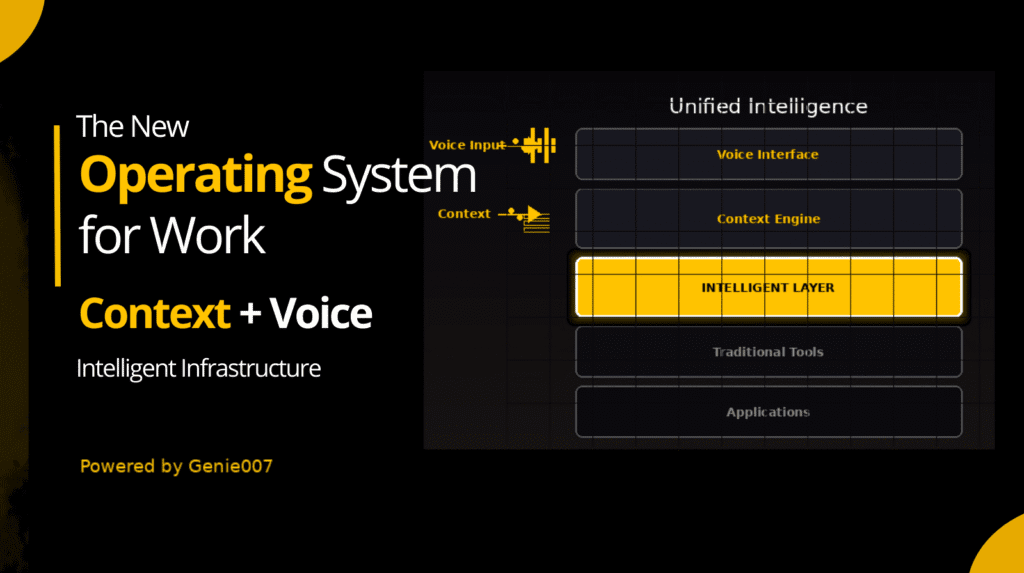
The hallmark of a professional-grade AI assistant is its ability to “read” the room, digitally speaking. Contextual intelligence allows the software to adjust its behavior based on the active browser tab or application.
- For Developers: In a coding environment, the assistant recognizes variable names and syntax, facilitating “Vibe Coding” where logic is dictated rather than typed.
- For Marketers: On social platforms like LinkedIn or X, the AI understands the need for engagement hooks and appropriate hashtagging.
- For Executives: In CRM or Email suites, it prioritizes brevity, professional greetings, and clear calls to action.
Eliminating the Edit Tax with 99% Accuracy
Accuracy in the modern era is no longer just about spelling; it is about semantic precision. High-performance tools now utilize large language models (LLMs) to predict the likely meaning of a sentence even if the audio is slightly muffled or the user has an accent. By achieving a 99% accuracy rate, Voice-to-Action tools eliminate the “Edit Tax.” When the output is correct the first time, the user stays in a state of “Deep Work,” maintaining a level of focus that is impossible when you are constantly stopping to correct a software’s mistakes.
Privacy and the Local Processing Standard
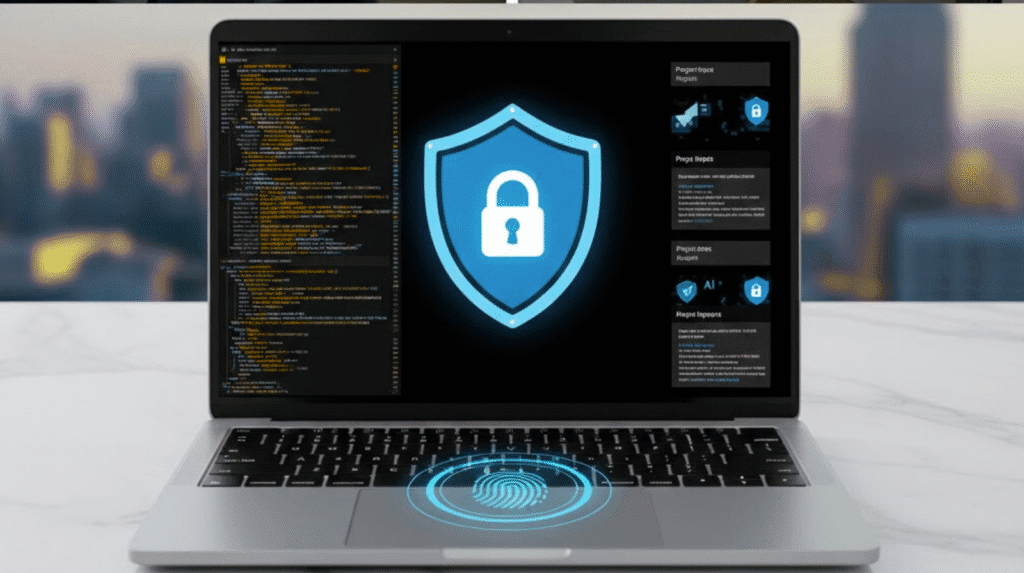
As professionals, our voices often carry sensitive data-financial figures, trade secrets, and private client information. The “Death of Voice-to-Text” is also tied to the death of unsecured cloud processing. The future of work demands that our data stays within our control.
The most advanced AI assistants now process voice data locally or within a secure browser sandbox. This ensures that your professional dictations are not being fed into a public training set. This “Privacy-First” architecture is what finally makes voice technology viable for sectors like Law, Healthcare, and Finance, where data sovereignty is non-negotiable.
Global Communication Without the Language Barrier
The professional world is no longer confined by borders, but it is often still confined by language. Voice-to-Action technology is currently bridging this gap by supporting over 140 languages with native-level fluency.
The breakthrough here is not simple translation; it is Cross-Lingual Execution. A user can speak their intent in their native language-let’s say Spanish-and the AI will execute the action in perfect, professional English. This allows non-native speakers to perform at the same level as native speakers, ensuring that the best ideas win, regardless of the language they were conceived in.
Conclusion: The New Interface of Productivity
We are standing at the end of the keyboard-centric era. While the keyboard will remain a niche tool for fine-tuning, the primary interface of the professional world is becoming the human voice-not as a tool for “writing,” but as a tool for “doing.”
The rise of Voice-to-Action signifies a more human-centric approach to technology. We are no longer required to learn the “language of the computer” (typing, clicking, and complex menus). Instead, the computer is finally learning to understand us. For the professional looking to stay ahead in 2026, adopting an intent-based voice workflow is no longer an option; it is a necessity for survival in a high-speed, AI-driven economy.
Frequently Asked Questions (FAQ)
What is the main difference between Voice-to-Text and Voice-to-Action?
Voice-to-Text simply transcribes your spoken words into written text. Voice-to-Action understands your intent and performs tasks-like drafting emails, creating calendar invites, or writing code-based on the context of your work.
Can Voice-to-Action handle technical industry jargon?
Yes. Unlike standard tools, professional assistants like Genie 007 are context-aware. They recognize the environment you are working in (e.g., a code editor or a medical database) and adjust their vocabulary to match the specific industry terminology.
Is my voice data safe when using these AI tools?
Modern professional tools prioritize “Local Processing,” meaning your voice is analyzed on your device or within your browser rather than being sent to a permanent cloud storage server. Always check for a “Privacy-First” badge on the tool you choose.
How does this improve productivity for teams?
It reduces the “Edit Tax” and speeds up communication. Teams can respond to inquiries, document processes, and manage projects up to 10x faster than typing, allowing more time for high-level strategy and creative work.
Your privacy matters. Genie 007 processes all audio locally on your device — no recordings are stored, no data is sent to external servers. For full details, see our security and privacy page.
Ready to Try Voice-to-Action?
Install Genie 007 free — no credit card required. Works on any website, any text field.
Install Genie 007 Free →Written by Bill Kiani, founder of Genie 007.