
Over the past few years, AI chatbots have transformed how professionals interact with technology. From drafting emails to generating content ideas, chat-based AI tools made advanced automation accessible to everyday users. For a while, this felt like the peak of productivity innovation. You could ask a question, get an answer, and generate text in seconds.
But as workflows became more complex and professionals started using AI for real, daily work, a limitation quietly surfaced.
Chatbots still required too much manual effort.
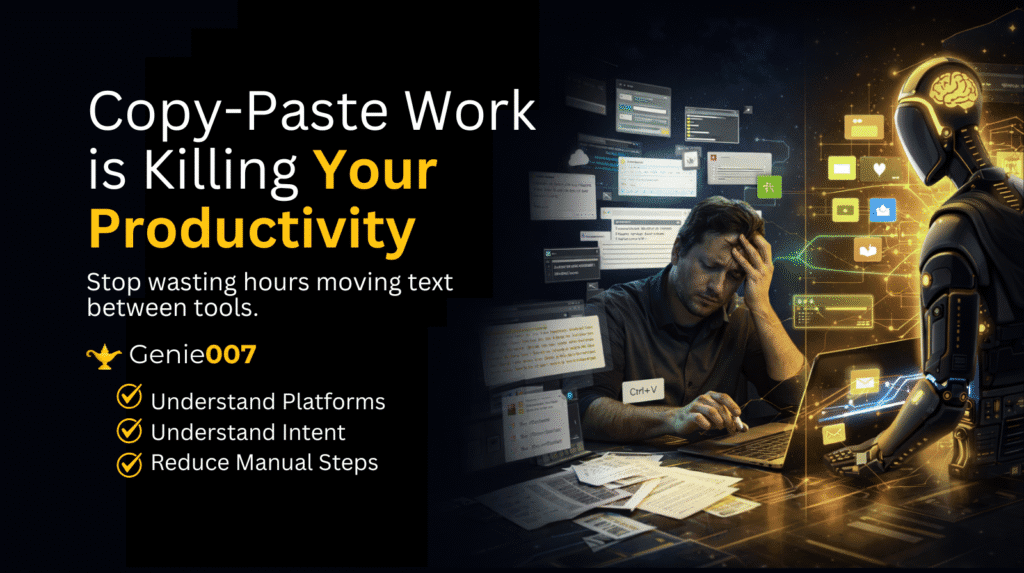
You had to copy content from one tab, paste it into another, explain context in detail, wait for a response, and then bring the result back into your original workflow. This process, repeated dozens of times per day, created a new kind of friction that no one initially measured. AI was helping – but it was also adding extra steps.
In 2026, a new category is emerging that removes this friction completely: Browser AI Agents.
These are not AI tools you open in a separate window. They live inside your browser, understand what you are doing in real time, and assist you without breaking your workflow. This shift from chatbot AI to browser-native AI agents represents the next major evolution in digital productivity.
Why Chatbots Are No Longer Enough for Professional Work
Chatbots are powerful, but they are fundamentally reactive. They know only what you tell them. They cannot see the email you are replying to, the LinkedIn post you are writing, or the code you are editing unless you manually paste it in.
For casual use, this is acceptable. For professional use, it becomes inefficient.
A typical task using a chatbot looks like this: you copy an email, open the AI tool, paste the email, write a prompt explaining what you want, copy the result, return to your inbox, paste the reply, and then edit formatting. What feels like a “smart” workflow actually includes six or seven manual steps.
Over time, this leads to what experts call context switching fatigue – the mental cost of constantly moving between tabs, tools, and windows. Even if each switch takes only a few seconds, the cognitive disruption adds up to significant productivity loss across a full workday.
Browser AI agents remove this entire process. They work exactly where you are already working.
What Is a Browser AI Agent ?
A Browser AI agent is an intelligent assistant built as a browser extension that can understand the content on your screen, interpret your intent, and perform tasks directly within the website you are using. Instead of relying on prompts and pasted text, it reads the environment around you and adapts its behavior accordingly.
If you are in Gmail, it knows you are writing or replying to an email. If you are on LinkedIn, it recognizes that you are creating professional social content. If you are inside a code editor, it switches to a technical mode suitable for developers.
This environmental awareness allows the AI to produce highly relevant output without needing long explanations. The assistant already knows the context – you simply tell it what you want to do.
This is a fundamental shift from “AI that responds” to AI that collaborates.
The Power of Context Awareness
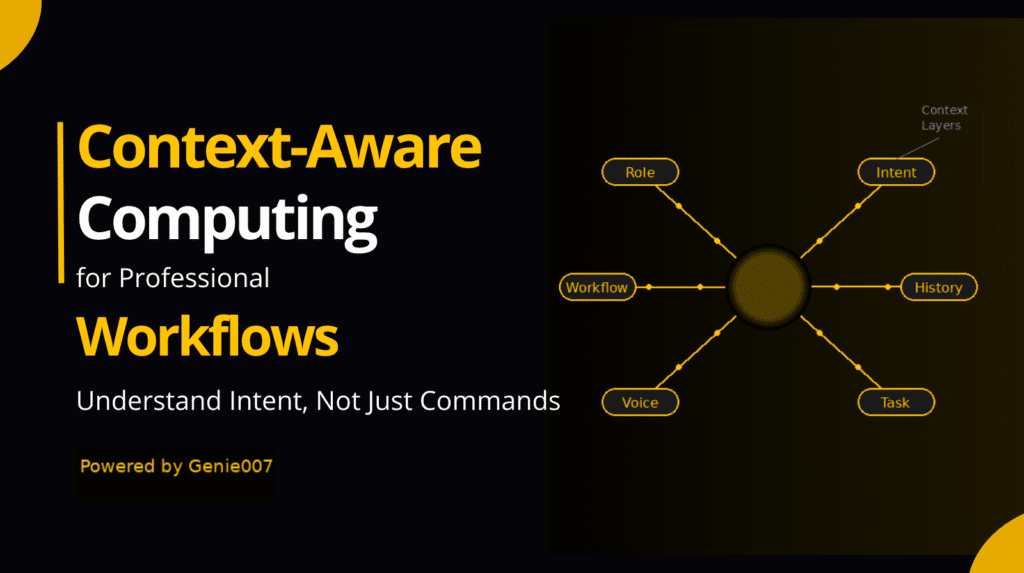
One of the most significant aspects of browser AI agents is context awareness. Traditional AI tools operate in isolation. They depend entirely on user input to understand a situation. Browser AI agents, however, operate within your digital environment.
They can analyze the page structure, read visible text, and determine the type of platform you are using. This allows them to adjust tone, format, and style automatically.
For example, when drafting a LinkedIn post, the AI uses a professional, structured tone. When responding to a casual social media comment, it becomes conversational. When working with technical documentation, it shifts into precise and descriptive language.
This level of adaptation dramatically reduces the need for prompt engineering and makes interactions feel natural.
From Voice-to-Text to Voice-to-Action
Most professionals are familiar with voice typing and dictation software. These tools convert speech into text, which still requires manual editing, formatting, and placement. While helpful, this is still a transcription process.
Browser AI agents introduce a more advanced concept: voice-to-action.
You are no longer speaking to type words. You are speaking to perform tasks.
You can say, “Reply politely and confirm the meeting for Friday,” and the AI generates a complete, formatted email reply inside Gmail. You can say, “Turn this article into a LinkedIn post,” and the content appears in the post editor, ready to publish.
This eliminates the keyboard from many daily tasks and turns speech into a command interface for your browser.
Why Businesses Are Rapidly Adopting Browser AI Agents
For organizations, the appeal of browser AI agents is not novelty but measurable efficiency. Employees spend a large portion of their day writing emails, creating documents, managing social media, and responding to messages. Reducing the time required for these tasks directly increases productivity.
Key benefits businesses are observing include:
- Significant reduction in time spent drafting communication
- Fewer copy-paste errors across platforms
- Reduced physical strain from constant typing
- Faster response times to clients and colleagues
- Improved consistency in tone and quality of communication
When multiplied across teams, these small time savings become substantial operational gains.
Privacy and the Shift Toward Local Processing
Another reason for the rise of browser AI agents is data privacy. Many chatbot platforms rely on cloud processing, meaning sensitive content must be sent to external servers for analysis.
Modern browser AI agents are designed with privacy in mind. By processing much of the data locally within the browser, they reduce the risk of sensitive information being stored or transmitted externally. This approach is particularly valuable for professionals in legal, financial, and healthcare industries.
Real-World Use Cases Across Professions
Browser AI agents are not limited to one type of user. Their flexibility makes them valuable across roles.
Professionals managing emails can dictate intelligent replies without typing. Content creators can draft posts directly on social platforms. Developers can document code and generate boilerplate scripts through voice commands. Business owners can analyze competitor websites and summarize information instantly.
The common factor is that the AI works within the user’s existing environment rather than requiring a separate workspace.
Genie 007 as an Example of This Evolution
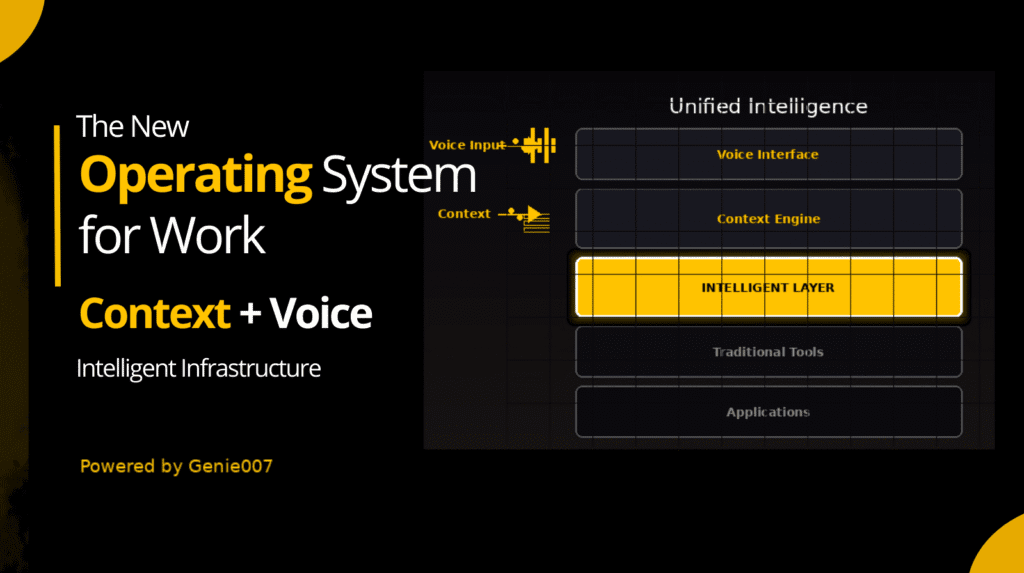
Genie 007 exemplifies what a browser AI agent can achieve. Rather than acting as a chatbot or simple dictation tool, it understands the webpage, listens to voice commands, and performs tasks in real time.
Its ability to combine context awareness, voice-to-action functionality, multilingual support, and privacy-first design makes it a practical demonstration of how this technology category is redefining productivity.
The Future: Natural Commands Instead of Prompts
As browser AI agents become more advanced, the need for complex prompts is disappearing. Users no longer need to learn how to “talk to AI.” They simply speak naturally, as if instructing a colleague.
Commands like “make this shorter,” “use a formal tone,” or “summarize this page” are understood instantly because the AI can see what you are referring to.
This natural interaction model is likely to replace traditional prompt-based systems in the coming years.
Conclusion
Chatbots introduced the world to AI-assisted work, but they were only the first step. The real transformation is happening with browser AI agents that integrate directly into professional workflows.
Your privacy matters. Genie 007 processes all audio locally on your device — no recordings are stored, no data is sent to external servers. For full details, see our security and privacy page.
By eliminating context switching, understanding on-screen content, and turning voice into action, these tools are redefining how people interact with the web. What once required multiple tools and steps can now be done smoothly within a single environment.
As this technology matures, the browser is no longer just a window to the internet. It becomes an intelligent workspace – one that works alongside you, understands your intent, and helps you accomplish tasks faster than ever before.
Frequently Asked Questions
How does voice typing compare to keyboard typing?
Most people type at 30-40 WPM but speak at 130-150 WPM. Voice typing with Genie 007 is 3-4x faster with 99.5% accuracy.
Does Genie 007 work on any website?
Yes. Any text field — Gmail, Slack, Notion, LinkedIn, GitHub, Google Docs, and hundreds more.
Is voice dictation private?
Genie 007 processes all audio locally. No recordings stored or sent externally. GDPR compliant, HIPAA ready.
Ready to Try Voice-to-Action?
Install Genie 007 free — no credit card required. Works on any website, any text field.
Install Genie 007 Free →Written by Bill Kiani, founder of Genie 007.