

Artificial intelligence is now a permanent topic in executive meetings. Budgets are being assigned to AI initiatives, teams are being encouraged to use AI tools, and organizations are exploring how automation can improve performance. Yet many CEOs are noticing a critical gap between AI adoption and real productivity improvement.
The problem is not a lack of AI tools. The problem is that companies are still operating with traditional productivity software instead of adopting AI workflow agents that transform how work is executed across platforms.
Understanding AI workflow agents in 2026 is essential for CEOs who want to reduce workflow friction, improve operational efficiency, and prepare their organizations for the future of work before 2027.
The Hidden Workflow Friction Inside Traditional Productivity Software
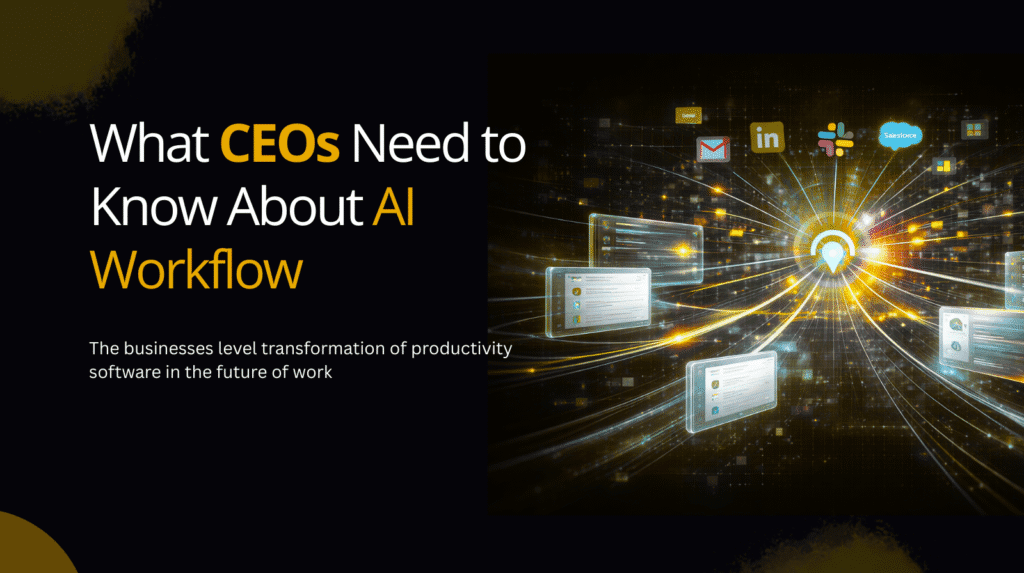
Modern organizations rely on Gmail, Slack, LinkedIn, CRMs, dashboards, project tools, and documentation platforms. These systems are powerful, but they introduce workflow friction that slows employees down every day.
Employees constantly:
- Switch between platforms
- Copy information from one tool to another
- Rewrite similar emails and messages
- Update dashboards manually
- Perform repetitive administrative communication
This invisible friction is the biggest reason why traditional productivity software fails to deliver true efficiency, even when teams are highly skilled and digitally equipped.
Why AI Tools Do Not Eliminate Workflow Friction
Many companies believe they have adopted AI because employees use AI writing assistants or chatbots. However, these AI tools only help with content generation. They do not remove the manual work required to execute tasks across platforms.
An employee may generate an email using AI, but they still have to paste it into Gmail, format it, and send it. The workflow remains manual.
This is where CEOs must understand the difference between AI tools and AI workflow agents.
AI tools improve writing.
AI workflow agents improve execution.
What Are AI Workflow Agent and How They Change Work
AI workflow agents are context-aware systems that understand user intent and perform actions directly across software platforms. They work inside the browser and business tools employees already use.
Instead of employees operating software step-by-step, AI workflow agents operate the software on behalf of employees.
They understand:
- What the user wants to do
- Which platform is open
- How to complete the task without manual switching
This shift represents the future of agent-driven productivity.
Why AI Workflow Agents Matter for CEOs and Business Leaders
For employees, AI workflow agents save time. For CEOs, they create measurable operational efficiency across departments.
When workflow friction is removed:
- Teams communicate faster
- Response time to clients improves
- Administrative workload decreases
- Employees focus on high-value tasks
- Productivity increases without increasing headcount
This is why AI workflow automation for business is becoming a strategic priority before 2027.
From Tool-Based Productivity to Agent-Driven Productivity
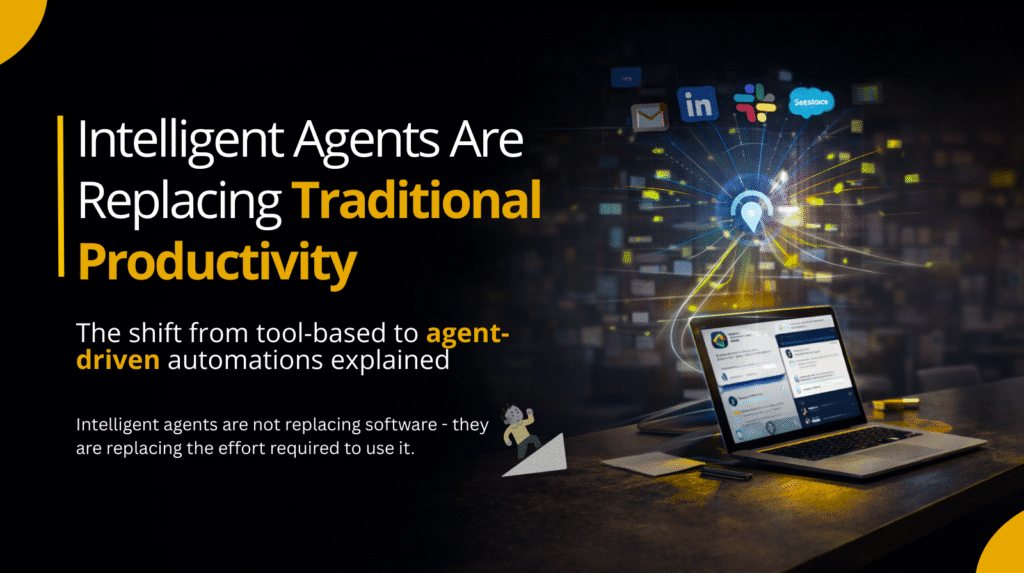
For decades, productivity strategy meant choosing the best tools: email software, chat platforms, CRM systems, and documentation apps. By 2027, productivity strategy will focus on choosing the right AI workflow agent that operate across all these tools.
Software will still exist, but employees will no longer be the ones manually operating it. AI agents will translate human intent into digital execution.
This is the transition from tool-based productivity to agent-driven productivity.
Early Signs of AI Workflow Automation in the Workplace
The shift toward AI workflow automation is already visible:
- Professionals using voice commands instead of typing
- Context-aware AI understanding what is on the screen
- Browser-native AI assistants performing tasks across websites
- Reduced manual drafting for routine communication
These signs show how AI workflow agent in 2026 are reshaping daily work.
How Genie007 Demonstrates AI Workflow Agents in Action
Genie007 is an example of how AI workflow agents are entering professional environments. Instead of acting as a writing assistant, Genie007 acts as a context-aware, voice-to-action AI that performs tasks across Gmail, LinkedIn, Slack, dashboards, and documentation platforms.
This removes manual typing, platform switching, and repetitive communication by allowing professionals to execute tasks through natural voice commands.
For CEOs, this demonstrates how AI workflow automation for business works in real scenarios.
The Competitive Advantage of Adopting AI Workflow Agents Early
Organizations that adopt AI workflow agents before 2027 gain advantages that competitors struggle to match:
- Faster communication cycles
- Higher team output
- Reduced employee burnout
- Improved client responsiveness
- Better operational efficiency
These benefits come from eliminating workflow friction, not increasing effort.
Preparing Your Organization for AI Workflow Agents
CEOs should start by identifying where workflow friction is highest:
- Email overload and repetitive communication
- CRM and dashboard updates
- Client and social messaging
- Administrative documentation work
These areas benefit immediately from AI workflow automation and agent-driven productivity.
The Future of Work: AI Workflow Agents by 2027
By 2027, the expectation will not be that employees manually operate software. The expectation will be that employees instruct AI workflow agents to complete tasks across platforms.
Work will be defined by intent, not interfaces.
This is the future of intelligent productivity software.
Finally; Why CEOs Must Understand AI Workflow Agents Now
AI adoption is no longer about experimenting with tools. It is about transforming how work happens across the organization.
CEOs who understand AI workflow agents, workflow automation, and agent-driven productivity will lead organizations that operate faster, smarter, and more efficiently before 2027.
The companies that succeed will not be those with the most software, but those where software is quietly operated by intelligent agents.
Frequently Asked Questions About AI Workflow Agents
What are AI workflow agents?
AI workflow agents are context-aware systems that understand user intent and perform actions across software platforms automatically, reducing manual work and workflow friction.
How are AI workflow agents different from AI tools?
AI tools help generate content, while AI workflow agents execute tasks across platforms like Gmail, Slack, LinkedIn, and dashboards on behalf of the user.
Why should CEOs care about AI workflow automation?
AI workflow automation improves operational efficiency, reduces employee workload, and increases productivity without increasing headcount.
How do AI workflow agents reduce workflow friction?
They eliminate platform switching, manual typing, repetitive communication, and administrative tasks by executing actions through intelligent automation.
What is agent-driven productivity?
Agent-driven productivity is a model where intelligent agents operate software for employees, allowing professionals to focus on high-value tasks.
Are AI workflow agents the future of productivity software?
Yes. By 2027, organizations will rely more on AI workflow agents than traditional productivity tools for daily operations.
How does Genie007 demonstrate AI workflow agents in action?
Genie007 uses voice-to-action, context-aware AI to perform tasks across platforms like Gmail, LinkedIn, Slack, and dashboards without manual input.
When should companies start adopting AI workflow agents?
Companies should start now to gain a competitive advantage and prepare for the shift to agent-driven productivity before 2027.