
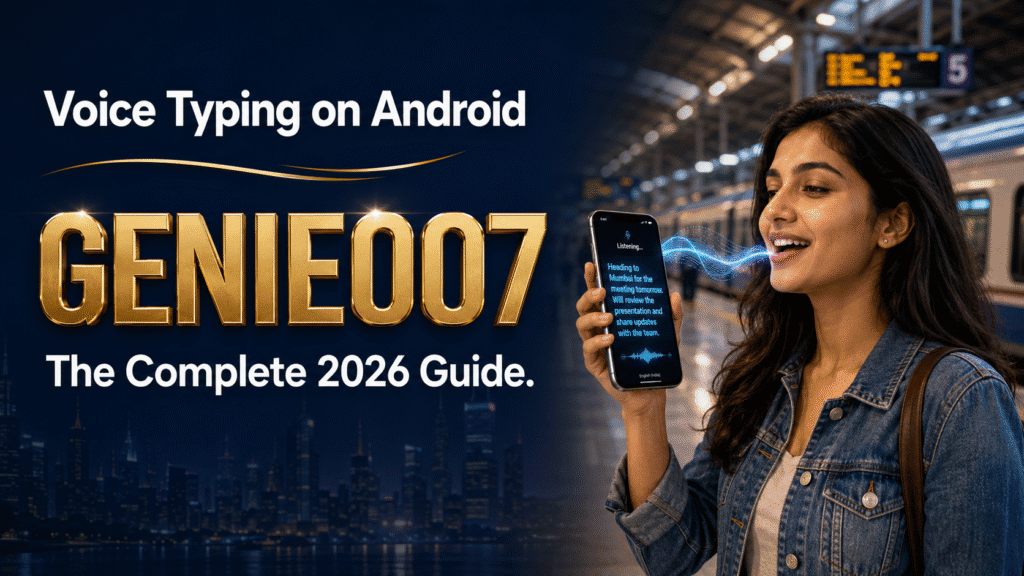
Voice typing on Android is better in 2026 than it has ever been. Gboard ships on almost every Android phone, Pixel owners get on-device dictation that keeps pace with natural speech, and Google is now building Gemini directly into the keyboard. You can stop typing with your thumbs today, for free. This guide walks through the real setup steps for Gboard voice typing and Pixel’s Assistant voice typing, the settings most people never find, where the built-in tools run out of road, and what to install when you need more than a transcript.
How to Set Up Gboard Voice Typing on Any Android Phone
Gboard is Google’s keyboard and it comes preinstalled on most Android phones sold outside Samsung’s ecosystem (and even Samsung owners can install it free from the Play Store). Its microphone button is the standard way to do Android voice to text, and it takes about thirty seconds to start using:
- Open any app you can type in — Gmail, WhatsApp, Keep, anything.
- Tap a text field so the keyboard appears.
- Tap the microphone icon in the top-right of the Gboard toolbar.
- When you see “Speak now”, start talking. Your words appear as text in real time.
If there is no microphone icon, it has been switched off. Long-press the comma key (or tap the settings cog in the toolbar), go to Voice typing, and turn on Use voice typing. If it still refuses to listen, check that Gboard has microphone permission under Settings → Apps → Gboard → Permissions. Google’s official Gboard voice typing guide covers the same steps for older Android versions.
Download offline language packs
Buried in Gboard settings → Voice typing → Faster voice typing is an option to download an on-device speech model — roughly 80MB per language. Once installed, dictation works with no signal at all, transcribes noticeably faster, and your audio never leaves the phone. If you dictate anything sensitive, or you spend time on the Tube or on flights, this is the first setting to change.
Sort out punctuation
On most non-Pixel phones, Gboard’s automatic punctuation is patchy — you will often need to say “comma”, “full stop” or “question mark” out loud. There is an Auto punctuation toggle under Voice typing settings on supported devices, but its availability depends on your phone, language and Gboard version. This inconsistency is one of the most common complaints about voice typing on Android, and we come back to it below.
Assistant Voice Typing on Pixel Phones
If you own a Pixel 6 or newer (including the Fold and Tablet), you get a substantially better system called Assistant voice typing, powered by the Tensor chip. It runs speech recognition on the device itself, so text appears at roughly the speed you speak, and it behaves less like a tape recorder and more like a typist:
- Automatic punctuation that actually works — full stops, commas and question marks are inserted as you talk.
- Voice editing commands — say “clear”, “delete”, “undo”, “next” or “send” to edit and fire off a message without touching the screen.
- Emoji by voice — “smiling face emoji” inserts 😊 rather than typing the words.
- Hands-free flow — dictation stays active between messages instead of cutting out after each pause.
To enable it, open Gboard settings, tap Voice typing, and switch on Assistant voice typing. One catch that trips people up: your primary Gboard language must match your device language, or the toggle will not appear. Google documents the full command list in its advanced voice typing help page.
In day-to-day use, this is the best free dictation experience on any phone. It is a big part of why Pixel owners say they can no longer go back to other Android handsets for voice input.
What’s Changing in 2026: Gemini Joins the Keyboard
At its Gemini Intelligence announcement in May 2026, Google previewed Rambler, a Gboard upgrade that uses Gemini to tidy up natural speech instead of transcribing it word for word. Ramble through a message — self-corrections, pauses, “actually, scrap the apples” — and Rambler produces the clean final version, dropping the parts you changed your mind about. It can polish text in real time and handles switching languages mid-message, according to 9to5Google’s coverage.
This matters because Google is publicly conceding the point this article is built on: a verbatim transcript was never the goal. The catch is hardware. Rambler is slated for a summer 2026 release on premium phones — Pixel 10 and Galaxy S26 class devices with the silicon to run Gemini locally. If you are on a two-year-old mid-ranger, the smartest dictation Google makes is not coming to your phone.
Where Built-In Android Voice to Text Hits Its Limits
Everything above is genuinely worth setting up. But after a few weeks of heavy use, most people run into the same walls:
It types what you said, not what you meant. Outside Pixel’s newest features, Gboard is a stenographer. Every “um”, every restarted sentence, every rambling clause lands in the text field, and you end up thumb-editing the transcript — which quietly cancels much of the speed you gained. Our breakdown of how voice typing works explains why raw speech-to-text engines are built this way.
The experience is fragmented. Punctuation behaves differently on a Samsung Galaxy with Samsung Keyboard than on a Pixel with Gboard, and differently again per language. Fixes that work on one phone (clearing the cache, disabling multilingual typing) do nothing on another.
It has no idea where you are typing. The same flat transcript comes out whether you are writing a LinkedIn post, a Slack reply or a formal email. Tone, formatting and structure are entirely your problem.
The clever features are flagship-gated. Assistant voice typing needs a Pixel 6 or newer; Rambler will need a 2026 flagship. And on many non-Pixel devices, some languages are still processed in the cloud rather than on your phone — worth knowing if you dictate client or medical information.
Genie 007 on Android: From Transcription to Think-to-Text
Built-in voice typing answers the question “what did I say?” The more useful question is “what did I mean?” — and that is the idea behind think-to-text. The Genie 007 mobile app brings it to any Android phone, not just the latest Pixel, with two modes:
Voice Typing mode is dictation done properly: automatic punctuation and formatting on every device, no “comma, full stop” commands, and output that matches your personal writing style rather than a raw transcript. Speak in one of 140+ languages and, if you want, get the text out in another — live translation is built in, not bolted on.
Genie Mode skips dictation entirely. You state the intent — “reply to Priya, confirm Thursday works, ask her to send the deck before the call” — and it writes the complete message, matched to the platform: casual for WhatsApp or Slack, professional for email. You refine it by voice if the first draft is not right. Nothing to copy-paste between apps.
Here is how the three options stack up:
| Gboard voice typing | Assistant voice typing | Genie 007 mobile | |
|---|---|---|---|
| Works on | Any Android phone | Pixel 6 and newer only | Any Android phone (plus Windows, Mac, browser) |
| Punctuation | Patchy, device-dependent | Automatic | Automatic, styled to you |
| Understands intent | No — verbatim | No — verbatim | Yes — Genie Mode drafts the message |
| Languages & translation | Many languages, no translation | Limited language support | 140+ languages with live translation |
| Privacy | Cloud for some languages | On-device | No audio storage, zero data retention, AES-256 |
| Price | Free | Free (with the phone) | From £5/month, free trial |
Honest verdict: if all you need is occasional hands-free texting, Gboard is free and good — use it. Genie 007 earns its place when you write for a living on your phone: email, sales messages, social posts, multilingual work. Privacy is a core part of the design — commands and content never touch Genie 007’s servers, nothing is logged, no audio is stored, and it is GDPR compliant and HIPAA ready. Plans start at £5 a month on the pricing page, with a free trial and no credit card required.
Advanced Voice Typing Workflows Worth Stealing
Whichever tool you use, the gains come from changing habits, not just settings. Three workflows our users lean on daily:
Commute inbox triage. Open email on the train, and instead of dictating each reply word by word, state the outcome: “decline politely, suggest next week, keep it to three sentences.” One operations director who works this way told us her morning inbox went from two hours to about twenty minutes.
Cross-language messaging. Speak your reply in the language you think in; send it in the language your client reads. A non-native English speaker can dictate in their mother tongue and send polished, native-sounding English — no translate-app round trips.
Long-form capture, voice-first editing. Draft blog sections, meeting notes or reports by speaking in messy, natural bursts, then refine by voice (“tighten the second paragraph, make the tone more formal”). Speech runs at 130–150 words per minute against roughly 40 for practised thumb-typing, so even with editing you finish far sooner — the full maths is in our dictation vs typing speed comparison.
FAQ: Voice Typing on Android
How do I turn on voice typing on my Android phone?
Open any app you can type in, tap a text field, then tap the microphone icon at the top of the Gboard keyboard and speak when “Speak now” appears; if the icon is missing, enable it under Gboard settings → Voice typing and grant Gboard microphone permission. Samsung Keyboard has an equivalent mic button, or you can install Gboard free from the Play Store.
Why is voice to text not working on my Android?
The usual causes are a disabled voice typing toggle, missing microphone permission, an outdated keyboard app, or a language pack that never downloaded — check Gboard settings → Voice typing, then App permissions, then update Gboard in the Play Store. Clearing Gboard’s cache and temporarily switching off multilingual typing fixes most of the stubborn cases.
Does Gboard voice typing work offline?
Yes — download the on-device speech model (about 80MB per language) under Gboard settings → Voice typing → Faster voice typing, and dictation then works with no internet connection, runs faster, and keeps your audio on the phone. Pixel 6 and newer devices process Assistant voice typing on-device by default.
How do I get punctuation when voice typing on Android?
On a Pixel 6 or newer with Assistant voice typing enabled, punctuation is inserted automatically as you speak; on most other Android phones you either switch on Auto punctuation in Gboard’s voice typing settings (where available) or say the marks aloud — “comma”, “full stop”, “question mark”. AI dictation apps such as Genie 007 punctuate automatically on any device.
Is voice typing faster than typing on a phone?
Considerably — most people speak at 130–150 words per minute while thumb-typing averages around 40, so dictation is roughly three times faster before edits. The real-world gain depends on how much correcting the transcript needs, which is exactly where intent-aware tools pull further ahead of basic Android voice to text.
Try Genie 007 Free
You now know every trick built-in voice typing on Android has. When you are ready for a keyboard that writes what you mean instead of recording what you said, Genie 007 is the next step — on any Android phone, not just this year’s flagship.
Download Genie 007 free — available for Windows, Mac, mobile and as a browser extension. No credit card required.
Written by Bill Kiani, founder of Genie 007.